Checklist: Ideal Restaurant Staff Training – How to Stop Losing Money to Incompetence
Unstandardized waitstaff training creates massive hidden costs in hospitality. Explore our operational checklist and automate your staff onboarding with MenuMemo AI.
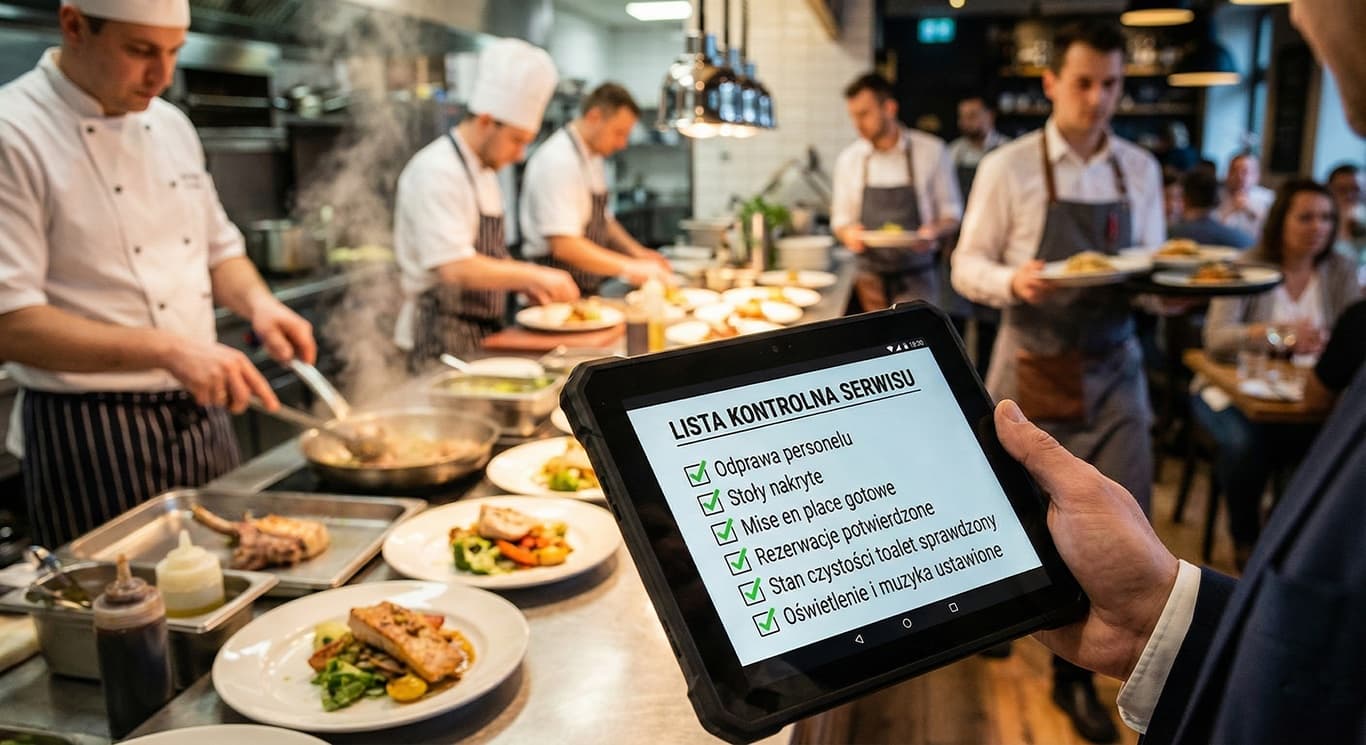
In the hospitality industry, they say the most expensive asset in a restaurant is an empty chair. However, an untrained employee who cannot properly serve that chair is just as costly. Staff turnover in HoReCa is exceptionally high, making employee onboarding an endless cycle that consumes manager time and guest patience. If your training strategy consists of throwing new hires into the deep end with a paper menu to memorize, you are losing money every single day.
Information Chaos and the "Telephone Game" Method
Most restaurants face the exact same challenge: knowledge about the menu, service standards, and sales techniques is passed down verbally. This creates immediate friction. A new waiter learns from a senior colleague who may be repeating established mistakes. The consequences are immediate:
- Lack of product knowledge: Staff members fail to identify ingredients or mandatory allergens.
- No suggestive selling: Waiters act merely as order-takers, avoiding up-selling or cross-selling out of fear or hesitation.
- Operational bottlenecks: Slow POS operation leads to order entry errors and kitchen delays.
What Is Inadequate Training Really Costing You?
Lacking a standardized onboarding framework results in direct financial and operational damage:
- Wasted time: Managers spend hours repeating basic instructions to every new hire instead of focusing on business growth and performance analysis.
- Lost revenue: Failing to use suggestive selling reduces average check sizes by 15–20%. Order entry mistakes lead to food waste and kitchen friction.
- Legal and brand risk: Lack of allergen awareness is a liability. It risks severe health hazard fines, negative reviews, and severe legal consequences in anaphylaxis cases.
Floor Scenario: What Did You Lose This Friday?
Picture a busy Friday night. The dining room is packed, and the kitchen is running at full capacity. Mark, a new server on his third day, approaches a table.
The guests ask if the pasta contains celery due to a severe allergy. Unsure, Mark runs to the kitchen to ask the head chef, who is currently plating 10 orders at once. A bottleneck forms. Mark returns and hesitatingly says, "I don't think so." Anxious, the guests cancel their food orders and ask for bottled water only.
At another table, guests finish their main course. Mark clears the plates and asks: "Will that be all?" They say yes, pay, and leave. What did your restaurant lose?
- Guest trust and the lifetime value of repeat customers.
- Dessert, coffee, and digestif sales because the server asked a closed question instead of using open-ended suggestive selling techniques.
- Kitchen efficiency caused by interrupting the head chef during peak rush hour.
Checklist: Master Restaurant Staff Training
To eliminate operational leaks, your onboarding program must enforce the following foundational checklist:
1. Product Knowledge & Allergen Awareness
- Full menu understanding: ingredients, flavor profiles, preparation time.
- Allergen protocol: accurate identification (gluten, shellfish, eggs, nuts, etc.) and guest communication guidelines.
2. Service Standards & Etiquette
- Greeting guests within 30 seconds of seating.
- Proper serving sequence (children, women, men; correct side placement).
- Wine and beverage ritual (bottle presentation, pouring technique).
3. Sales Techniques (Psychology of Upselling)
- Up-selling: recommending premium spirits or higher-tier dishes.
- Cross-selling: suggesting complementary sides, appetizers, or wine pairings.
- Sensory language: describing dishes using vivid, appetizing terminology (e.g., "crispy", "velvety").
4. POS System Proficiency
- Fast sign-in, table management, and order modifications (e.g., "no onions").
- Bill splitting and accurate transaction processing.
Automate Staff Training with Menu Memo
Building and maintaining this checklist using traditional paper manuals is inefficient and hard to track. Menu Memo solves this challenge by leveraging AI to automate menu training and service standards.
- AI Training Generator: Upload your menu, and the platform instantly builds interactive staff training modules.
- Mobile Learning: Waitstaff master ingredients, allergens, and sales techniques on their smartphones before stepping onto the floor.
- Knowledge Verification: Mandatory allergen sign-offs minimize human error and protect your business from liability.
- Check Size Optimization: Menu Memo teaches practical up-selling skills tailored specifically to your menu items.
Join the Menu Memo pilot program today to accelerate staff onboarding, protect your margins, and boost your average check size with AI automation.