Leader vs. Boss – How to Build Authority in Restaurants Without Yelling
Yelling and fear-based management destroy restaurant teams. Discover the key differences between a Boss and a Leader, reduce costly turnover, and build lasting authority with Menu Memo.
In the heat of dinner service, with high kitchen temperatures and constant time pressure, it is easy to confuse effective management with barking orders. However, the "boss-dictator" model no longer works in modern hospitality. To retain staff and maintain service quality, you must transition from being a Boss to becoming a Leader.
The Problem: The "Boss" Trap
Many restaurant managers—especially those promoted internally—fall into the trap of believing authority stems solely from a job title.
- A Boss focuses on strict control, giving orders, and short-term results at any cost. They rely on fear-based management and look for someone to blame when things go wrong ("Who burned this steak?!").
- A Leader builds influence through trust, inspiration, and staff development. They take responsibility for mistakes and examine process flaws to prevent recurring errors.
In hospitality, where daily operations depend heavily on teamwork and trust, an autocratic style ("do as I say") inevitably leads to high turnover, resentment, or passive compliance.
The True Cost of Bad Leadership
Managing with an iron fist might yield short-term compliance, but it comes with severe financial consequences:
- High Turnover Costs: Replacing a restaurant employee costs anywhere from 30% to 200% of their annual salary. An autocratic leadership style directly drains your cash flow.
- Operational Risk & Quality Loss: Staff managed by fear hide mistakes to avoid punishment. This breeds hidden waste (high food cost) and service failures in front of guests.
- Declining Productivity: Terrified teams lose initiative and problem-solving skills. Research proves that engaged, happy employees are 12% more productive.
Case Study: Friday Rush and a Broken Dishwasher
Imagine a busy Friday night. The dining room is full, tickets are piling up, and the dish pit suddenly overflows due to a dishwasher breakdown.
- The Boss Scenario: Stands in the middle of the kitchen shouting: "Why are there no plates?! How much longer do I have to wait?!" They search for someone to blame, escalating panic. Line cooks get stressed, servers fear entering the kitchen, and service grinds to a halt.
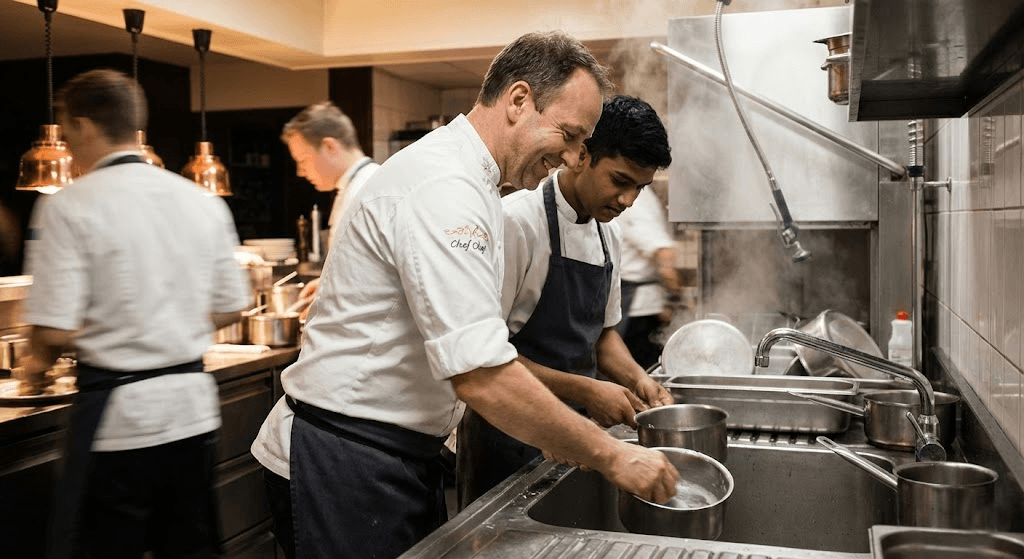
- The Leader Scenario: Applies leading by example. Without raising their voice, they roll up their sleeves and jump on the dish pit to clear the bottleneck. They send a clear message: "We are in this together." After service, they calmly analyze the root cause: Does the machine need maintenance, or do we need extra staff on Fridays?
This approach builds genuine respect. Teams will go above and beyond for a manager who supports them in crisis rather than one who merely points out failures.
The Solution: How Menu Memo Empowers Leaders
Building authority requires consistency. A leader cannot be everywhere at once, and repeating basic instructions turns you into a micromanaging Boss.
This is where Menu Memo acts as your digital operational assistant.
Key Benefits for Restaurant Leaders:
- Clear Expectations: Centralize menu knowledge, allergens, and service standards into a mobile app so your team knows exactly what is expected.
- Objective Feedback: Shift from emotional blame to fact-based coaching. When standards are documented in the app, performance discussions stay professional.
- Staff Empowerment: Provide your team with a self-learning tool, demonstrating that you invest in their professional growth.
- Time Savings: Reclaim valuable hours to focus on mentorship, financial management, and business strategy.
Build Lasting Authority in Your Restaurant
Ready to discover how technology can help you transition from a Boss to an empowered Leader?
Schedule a free consultation to test the Menu Memo pilot in your venue. See firsthand how digitizing operational standards fosters a stronger, more resilient team.